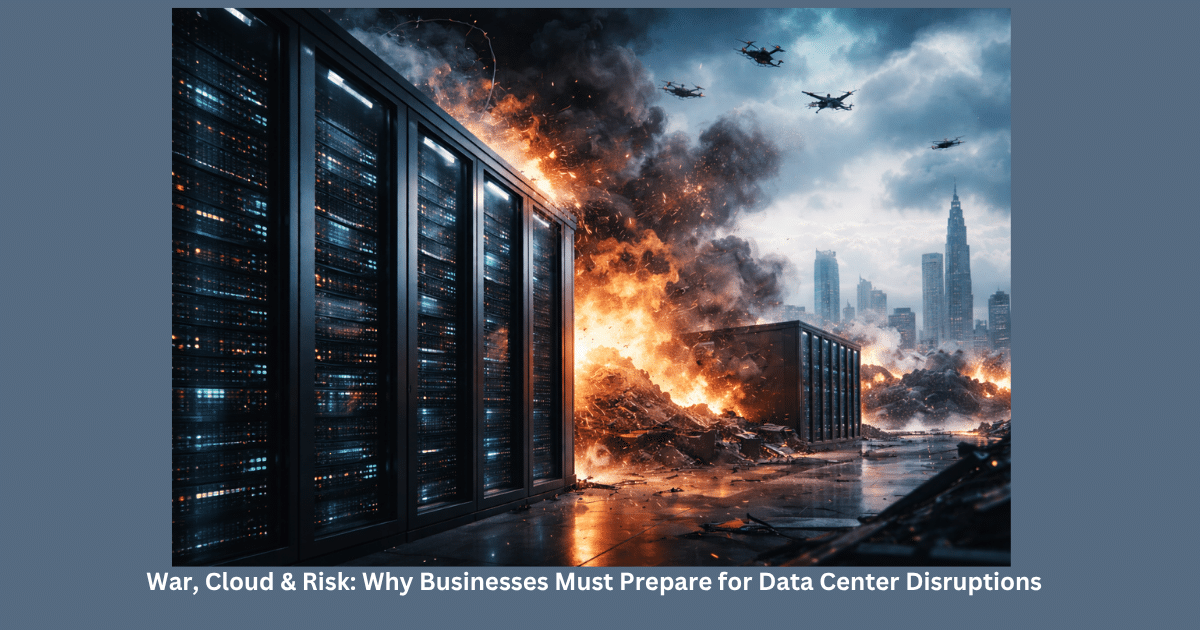
In today’s hyper-connected world, businesses rely heavily on cloud infrastructure to power applications, store data, and ensure seamless operations. The assumption has long been simple: cloud equals reliability. But recent geopolitical tensions and infrastructure disruptions have challenged that belief.
What happens when data centers once considered secure, redundant, and untouchable become vulnerable?
From regional conflicts to cyberattacks and natural disasters, the risks to cloud infrastructure are no longer theoretical. They are real, evolving, and increasingly impactful. This shift demands a new level of preparedness from businesses of all sizes.
This blog explores why data center disruptions are a growing concern, what risks they expose, and how organizations can build resilience with the right strategies and support systems.
The New Reality: Data Centers Are Not Untouchable
Cloud providers have invested billions into making infrastructure resilient. Yet, no system is immune to external disruptions.
Recent global events have shown that:
- Data centers can be affected by geopolitical tensions
- Regional outages can disrupt thousands of businesses simultaneously
- Even top-tier cloud platforms can experience downtime
This doesn’t mean the cloud is unreliable, it means risk management must evolve.
Why Data Center Disruptions Matter More Than Ever
When a data center goes down, the impact extends far beyond IT teams. It affects:
- Customer experience
- Revenue streams
- Brand reputation
- Business continuity
Imagine:
- An e-commerce platform going offline during peak sales
- A fintech app losing access to real-time data
- A SaaS product failing to serve global users
These are not rare scenarios anymore; they are becoming part of operational risk.
Real-Life Examples of Data Center Disruptions
1. Cloud Outages Affecting Global Businesses
Major cloud outages in recent years have impacted:
- Streaming platforms
- Banking services
- Logistics systems
Even a few hours of downtime resulted in millions in losses.
2. Natural Disasters and Infrastructure Failures
Floods, fires, and power failures have caused:
- Data loss
- Service interruptions
- Long recovery times
Businesses without proper data recovery strategies struggled the most.
3. Cyberattacks During Crisis Situations
During instability, attackers exploit vulnerabilities:
- Ransomware attacks spike
- Systems lacking security controls get compromised
- Recovery becomes complex without proper planning
Key Risks Businesses Must Address
❗ 1. Data Loss
Without backups, critical data can be permanently lost. A robust data recovery plan is no longer optional—it’s essential.
❗ 2. Downtime and Revenue Impact
Even a short outage can cost thousands or millions depending on the scale.
❗ 3. Security Vulnerabilities
During disruptions, systems are more exposed. Strong security frameworks and hardening practices reduce risk significantly.
❗ 4. Lack of Preparedness
Many companies still operate without:
- Incident response plans
- Monitoring systems
- Backup strategies
This is where failures begin.
Where Most Businesses Go Wrong
Despite growing awareness, many organizations make critical mistakes:
- Relying on a single cloud region
- Ignoring proactive hardening measures
- Delaying investment in incident response planning
- Not having access to 24×7 support
- Treating IT as reactive instead of strategic
These gaps become visible only when disruption occurs and by then, it’s too late.
Building a Resilient Cloud Strategy
Resilience is not about avoiding disruptions, it’s about being prepared for them.
Here’s how businesses can strengthen their infrastructure:
1. Multi-Region & Multi-Cloud Strategy
Avoid single points of failure by:
- Distributing workloads across regions
- Using backup environments
This ensures continuity even if one region fails.
2. Strong Backup & Data Recovery Plans
A well-defined data recovery strategy should include:
- Automated backups
- Regular testing
- Fast restoration capabilities
Recovery time can define business survival.
3. Proactive Security & Hardening
Implement:
- Regular system hardening
- Patch management
- Zero Trust architecture
This reduces vulnerabilities before they can be exploited.
4. Incident Response Readiness
A clear incident response plan ensures:
- Faster detection
- Immediate containment
- Reduced damage
Speed is critical during disruptions.
5. Continuous Monitoring & 24×7 Support
Downtime doesn’t follow business hours. With 24×7 support, businesses can:
- Detect issues early
- Resolve incidents faster
- Maintain uptime
6. Reliable IT Support Infrastructure
Strong IT support ensures:
- Smooth operations
- Quick troubleshooting
- Reduced dependency on internal teams
7. Remote Technical Capabilities
In global disruptions, physical access may not be possible. That’s where remote technical support becomes crucial ensuring systems are managed from anywhere.
How Geeks Solutions Helps Businesses Stay Resilient
At Geeks Solutions, we understand that modern infrastructure needs more than just maintenance it needs protection, intelligence, and rapid response.
We help businesses prepare for uncertainty with:
Advanced Security & Hardening
We implement proactive security and hardening strategies to safeguard your infrastructure.
Data Recovery Expertise
Our data recovery solutions ensure your critical data is never lost, even during major disruptions.
Incident Response Services
With rapid incident response, we minimize downtime and mitigate risks effectively.
Remote Technical Support
Our remote technical support ensures your systems are always accessible and manageable.
24×7 Support & Monitoring
With round-the-clock 24×7 support, we ensure your business stays operational at all times.
End-to-End IT Support
Our comprehensive IT support services help businesses scale securely and efficiently.
The Future: Resilience Over Convenience
The cloud has transformed how businesses operate but it also demands a shift in mindset.
Instead of asking:
“Is the cloud reliable?”
The better question is:
“Are we prepared if it fails?”
Resilient organizations don’t just rely on infrastructure, they build systems that can adapt, recover, and continue under pressure.
Final Verdict
Data center disruptions are no longer rare events—they are part of the modern risk landscape. Whether caused by geopolitical tensions, cyber threats, or infrastructure failures, the impact can be severe.
The difference between disruption and disaster lies in preparation.
Businesses that invest in data recovery, incident response, security, hardening, remote technical support, 24×7 support, and strong IT support will not just survive disruptions, they will thrive despite them.
Call to Action
Don’t wait for a disruption to test your systems.
Partner with Geeks Solutions today to build a resilient, secure, and future-ready infrastructure.
From proactive protection to rapid recovery we’ve got you covered 24×7.
Connect with our experts now and safeguard your business before the next disruption hits.
Frequently Asked Questions
Data center disruptions can be caused by cyberattacks, natural disasters, power failures, or geopolitical conflicts affecting infrastructure.
Geeks Solutions provides end-to-end support including data recovery, rapid incident response, proactive security and hardening, reliable remote technical support, and 24×7 support. This ensures your systems stay secure, recover quickly, and continue running smoothly even during unexpected disruptions.
Incident response is a structured approach to detecting, managing, and recovering from security or infrastructure incidents.
24×7 support ensures continuous monitoring and immediate action, reducing downtime and preventing major failures.
Security and hardening protect systems from vulnerabilities, reducing the risk of attacks during disruptions.
Data recovery ensures businesses can restore lost data quickly and continue operations without major losses.